Shoulder pain can be frustrating, especially when simple movements like reaching overhead, putting on a coat or reaching behind your back suddenly become painful.
One possible cause is a rotator cuff injury.
The rotator cuff plays an important role in keeping your shoulder stable and helping it move. When the muscles or tendons become irritated or damaged, this can lead to pain, weakness and difficulty using your shoulder normally.
But what exactly is the rotator cuff, and what happens when it becomes injured?
What is the rotator cuff?
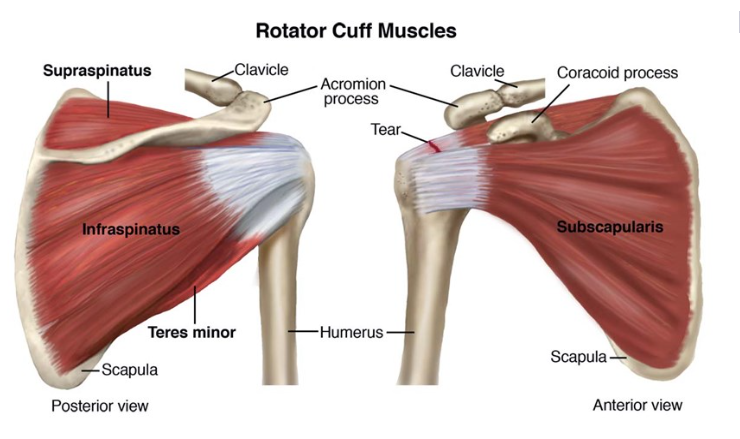
The rotator cuff is a group of four muscles positioned around the shoulder joint.

These muscles are:
- Supraspinatus – This muscle sits at the top of the shoulder blade. It helps you lift your arm away from your body, particularly when you first start raising your arm.
- Infraspinatus – Located on the back of the shoulder blade, the infraspinatus helps you rotate your arm outwards. For example, it helps when you move your forearm away from your body or reach behind you.
- Subscapularis – This muscle sits on the front surface of the shoulder blade. Its main role is to help you rotate your arm inwards, such as when bringing your hand towards your stomach.
- Teres minor – This is a smaller muscle located towards the back of the shoulder. Like the infraspinatus, it helps with rotating your arm outwards and also contributes to keeping the shoulder joint stable.
The tendons from these four muscles come together to form one larger tendon, known as the rotator cuff tendon.
This tendon attaches to the bony surface at the top of the upper arm bone, known as the head of the humerus.
There is also a small space underneath part of the shoulder blade called the acromion. This is known as the subacromial space, and the rotator cuff tendon passes through it.
Within this space is the subacromial bursa. This is a small, fluid-filled sac that helps the rotator cuff move smoothly.
Together, the rotator cuff muscles help to stabilise the shoulder joint and control shoulder movement.
What happens when the rotator cuff becomes irritated?
Rotator cuff problems don’t always look exactly the same.
The term rotator cuff related shoulder pain (RCRSP) is used as an umbrella term covering a range of shoulder conditions, including:
- Subacromial pain (impingement) syndrome
- Rotator cuff tendinopathy
- Symptomatic partial-thickness rotator cuff tears
- Full-thickness rotator cuff tears
Despite the differences between these conditions, the symptoms can be quite similar.
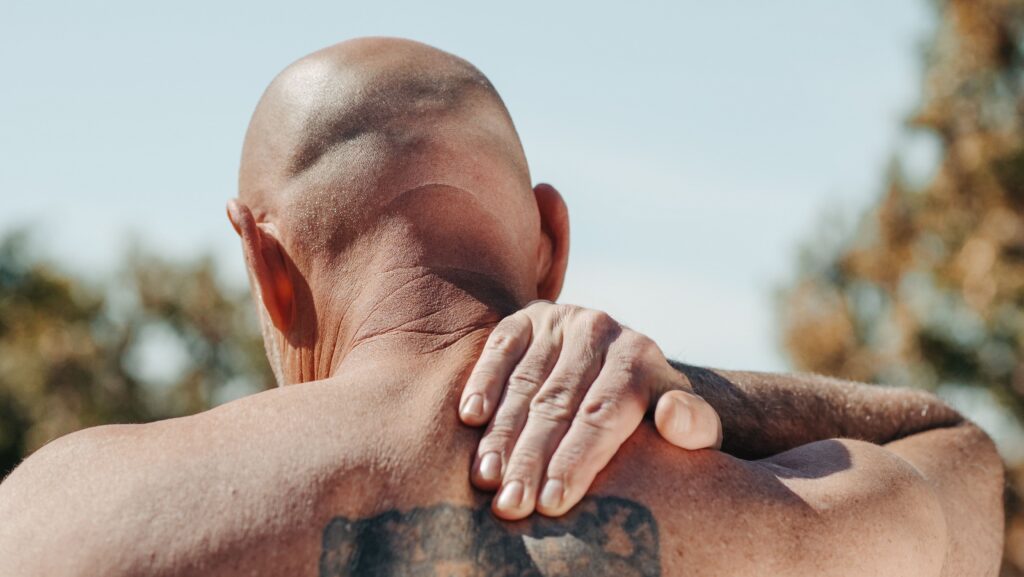
Pain is generally felt around the deltoid and upper arm region and is often related to activity. You may notice that the pain becomes worse when reaching overhead or reaching behind your back.
Let’s take a closer look at some of the conditions that can affect the rotator cuff.
Subacromial impingement
Subacromial impingement is also known as subacromial pain syndrome, tendinitis, tendonitis, bursitis or a trapped tendon.
As you raise your arm, the rotator cuff helps move the head of the upper arm bone underneath the acromion.
If something affects the rotator cuff, such as minor tears or overuse following a period of inactivity, the humeral head may not be pushed down properly.
This can cause it to move too close to the acromion, resulting in pain.
Problems with the bone of the acromion can also contribute. These can include arthritis and bone spurs.
Calcific tendonitis
Another condition affecting the rotator cuff is calcific tendonitis.
This occurs when calcium builds up within the rotator cuff tendon.
The calcium deposit can increase pressure within the tendon and cause chemical irritation, which can be very painful.
Calcific tendonitis tends to be more common in people between 30 and 60 years of age.
The calcium deposit can affect how the rotator cuff works and cause subacromial impingement. However, calcium deposits can also be present in people who have no symptoms at all.
Rotator cuff tears
The rotator cuff is particularly vulnerable to damage within the subacromial space.
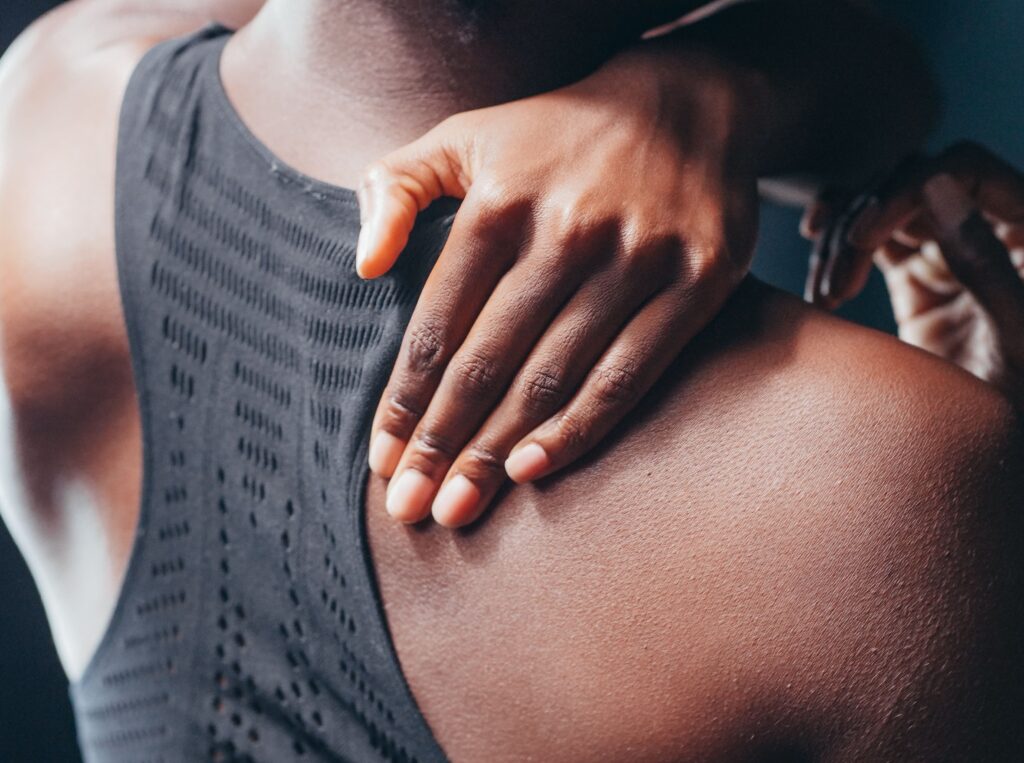
A tear can cause pain and may also make the shoulder feel weak.
Rotator cuff tears can happen in different ways.
Sometimes, a tear occurs suddenly following a single injury. In other cases, it develops gradually due to long-term wear and tear.
Tears can be either partial or full thickness, depending on how much of the tendon has been damaged.
Interestingly, minor tears are very common and may not cause any symptoms at all. However, even a small tear can sometimes be very painful.
How are rotator cuff tears graded?
The size of a rotator cuff tear can help classify its severity.
A Grade I tear is a small tear measuring less than 1 centimetre.
A tear measuring between 1 and 3 centimetres is considered medium-sized, or Grade II.
A tear between 3 and 5 centimetres is considered large.
The largest classification is a massive tear, which is defined as a tear greater than 5 centimetres. Massive tears frequently involve two or more of the four rotator cuff tendons, indicating a significant disruption to the structures that help stabilise the shoulder.
However, the physical length of a tear isn’t the only factor that matters.
The thickness and depth of the tear also help determine its severity.
Partial-thickness vs full-thickness tears
tator cuff tears are first categorised according to their depth.
A partial-thickness tear means the tendon has been damaged but has not been completely torn away from the bone.
Partial-thickness tears can then be further classified according to their location:
- Bursal-sided: the tear is on the side facing the bursa.
- Articular-sided: the tear is on the side facing the shoulder joint.
A full-thickness tear means the tendon has been completely torn through, creating a direct connection between the joint and the subacromial space.
Can a rotator cuff tear be treated without surgery?
The good news is that not every rotator cuff tear requires surgery.
Most small, partial-thickness tears are initially managed conservatively through physiotherapy and anti-inflammatory medications.
These tears often respond well to non-operative treatment, particularly when the muscle quality is high.
The main aim of rehabilitation is to strengthen the surrounding muscles so they can compensate for the damaged tendon.
However, if a large or massive full-thickness tear is present, particularly following a traumatic injury, surgical repair may generally be required to reattach the tendon to the bone.
Don’t ignore ongoing shoulder pain
A painful shoulder doesn’t necessarily mean you have a serious tear, and the presence of a tear doesn’t always mean you will experience symptoms.
Rotator cuff problems can vary considerably from person to person, which is why understanding what is causing your pain is an important part of getting the right treatment.
If shoulder pain is affecting your everyday activities, your work, your hobbies or your ability to exercise, getting it properly assessed can help you understand what is going on and what you can do next.

Struggling with shoulder pain?
At Newcastle Physio Solutions, we can assess your shoulder, help identify what may be contributing to your symptoms and create a treatment plan tailored to you.
Our approach combines hands-on treatment with rehabilitation and exercises where appropriate, helping you work towards moving better and getting back to the things you enjoy.
Want to find out what’s causing your shoulder pain?
Visit the Newcastle Physio Solutions website to learn more about shoulder pain and our physiotherapy services, or book an assessment with our team.
Move better. Live stronger. Live pain free.