
Love Golf But Struggling With Pain?
Golf may not be a contact sport, but it places significant demands on the body. Whether you’re playing competitively or enjoying a weekend round with friends, the repetitive nature of the golf swing can place considerable stress on your muscles, joints, and spine.
Many golfers don’t realise how much force is generated during a swing. Repeating this movement hundreds of times during practice sessions and rounds can increase the risk of injury, particularly if the body isn’t properly prepared.
The good news? Most golf-related injuries can be prevented, managed, and successfully treated with the right approach.
Why Do Golf Injuries Occur?
Research shows that golf injuries are commonly caused by repetitive movements and the rotational forces involved in the golf swing.
The golf swing requires your shoulders, spine, hips, and arms to work together in a coordinated sequence. Over time, repeatedly placing stress through these areas can lead to irritation, overuse injuries, and pain.
A study by Qureshi et al. (2022) found that golfers who trained more frequently were more likely to develop injuries. This highlights the importance of balancing practice with adequate recovery and conditioning.

Understanding the Golf Swing
The golf swing is a complex movement that can be broken down into four key phases:
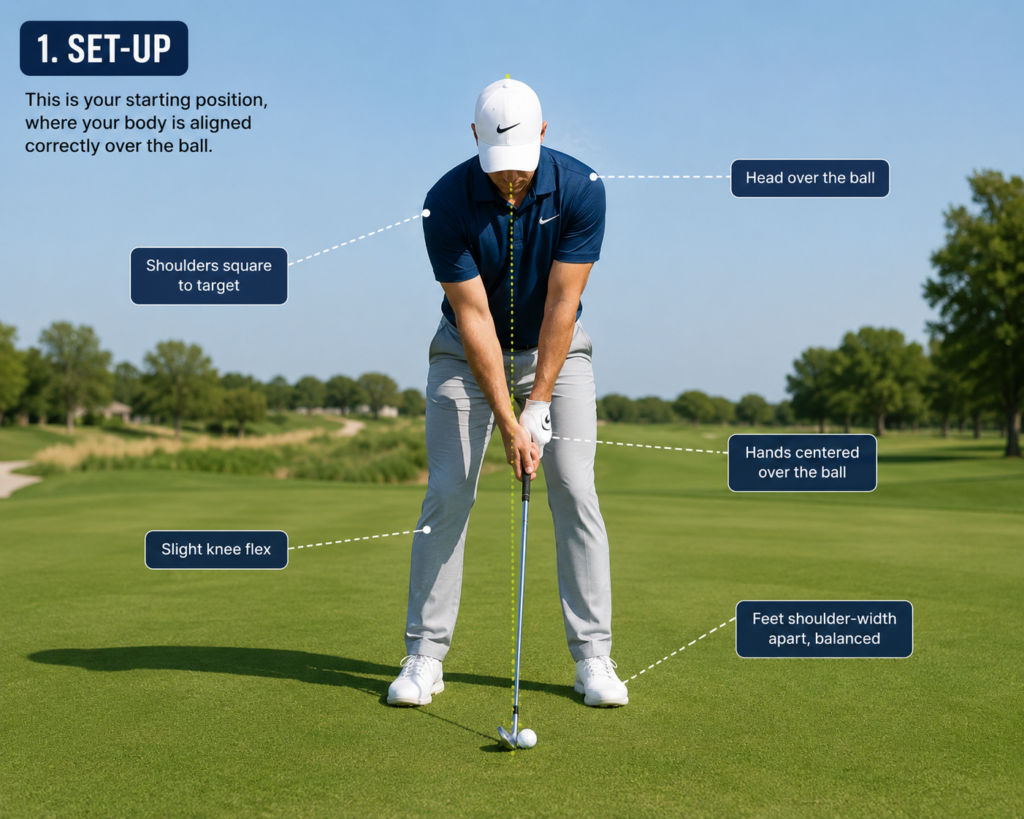
1. Set-Up
This is your starting position, where your body is aligned correctly over the ball.
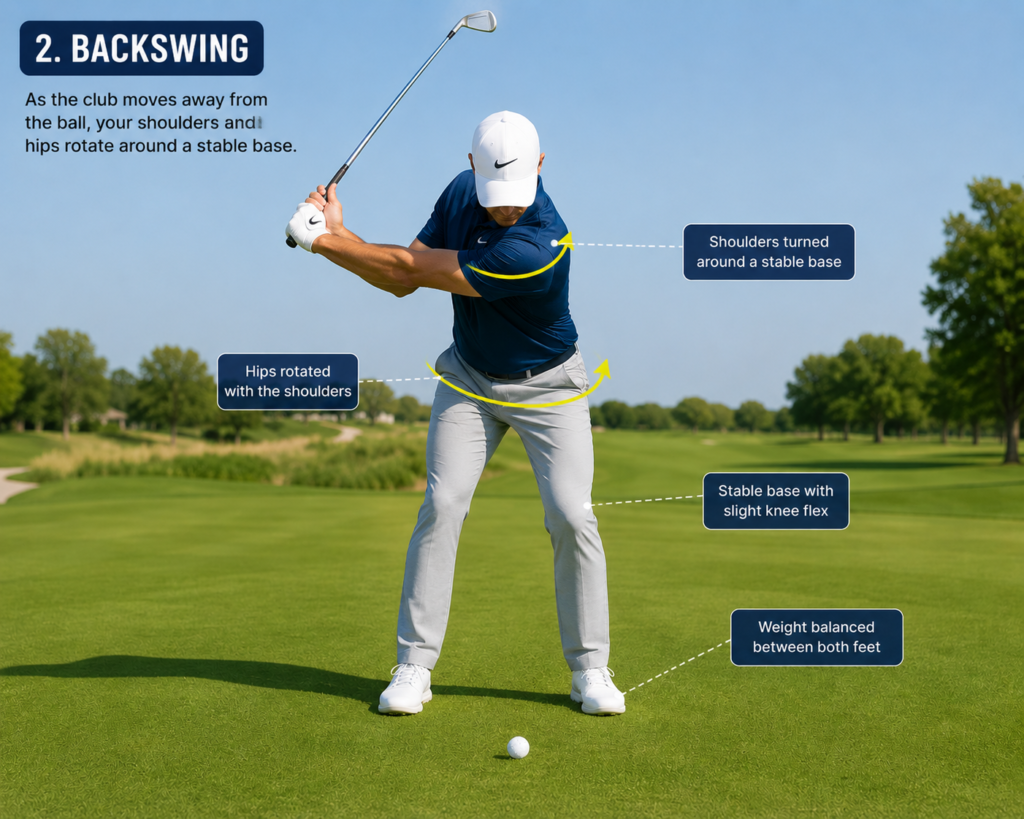
2.Backswing
As the club moves away from the ball, your shoulders and hips rotate around a stable base.
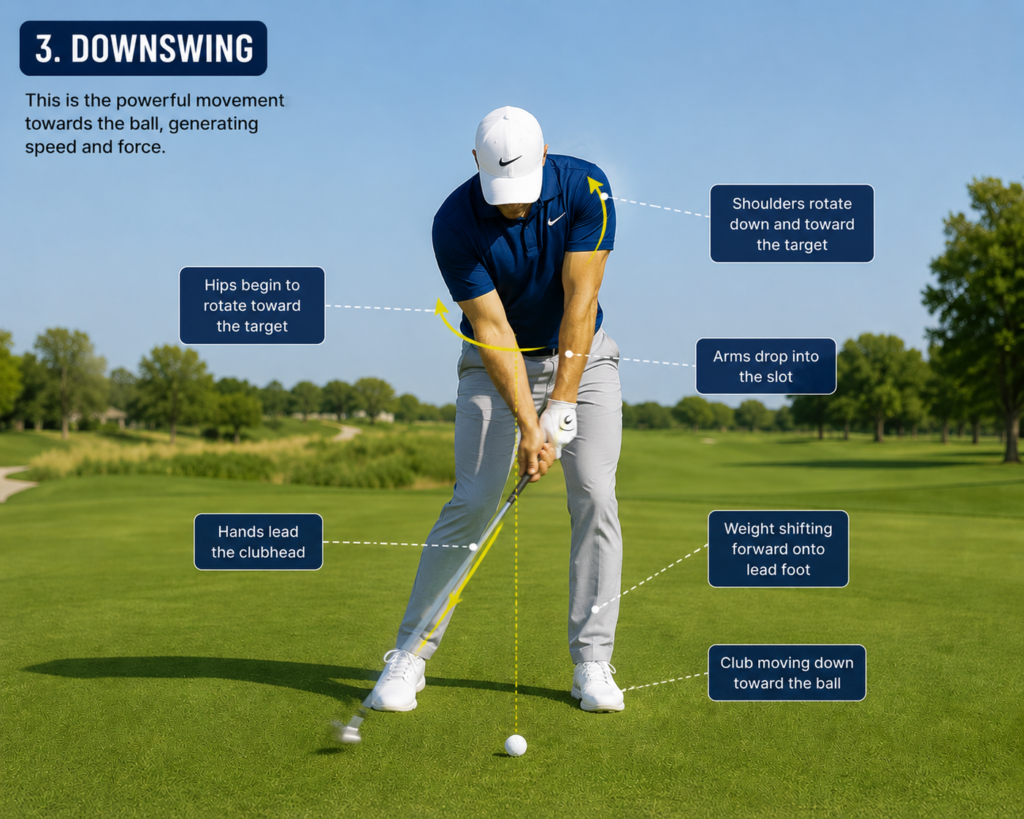
3. Downswing
This is the powerful movement towards the ball, generating speed and force.
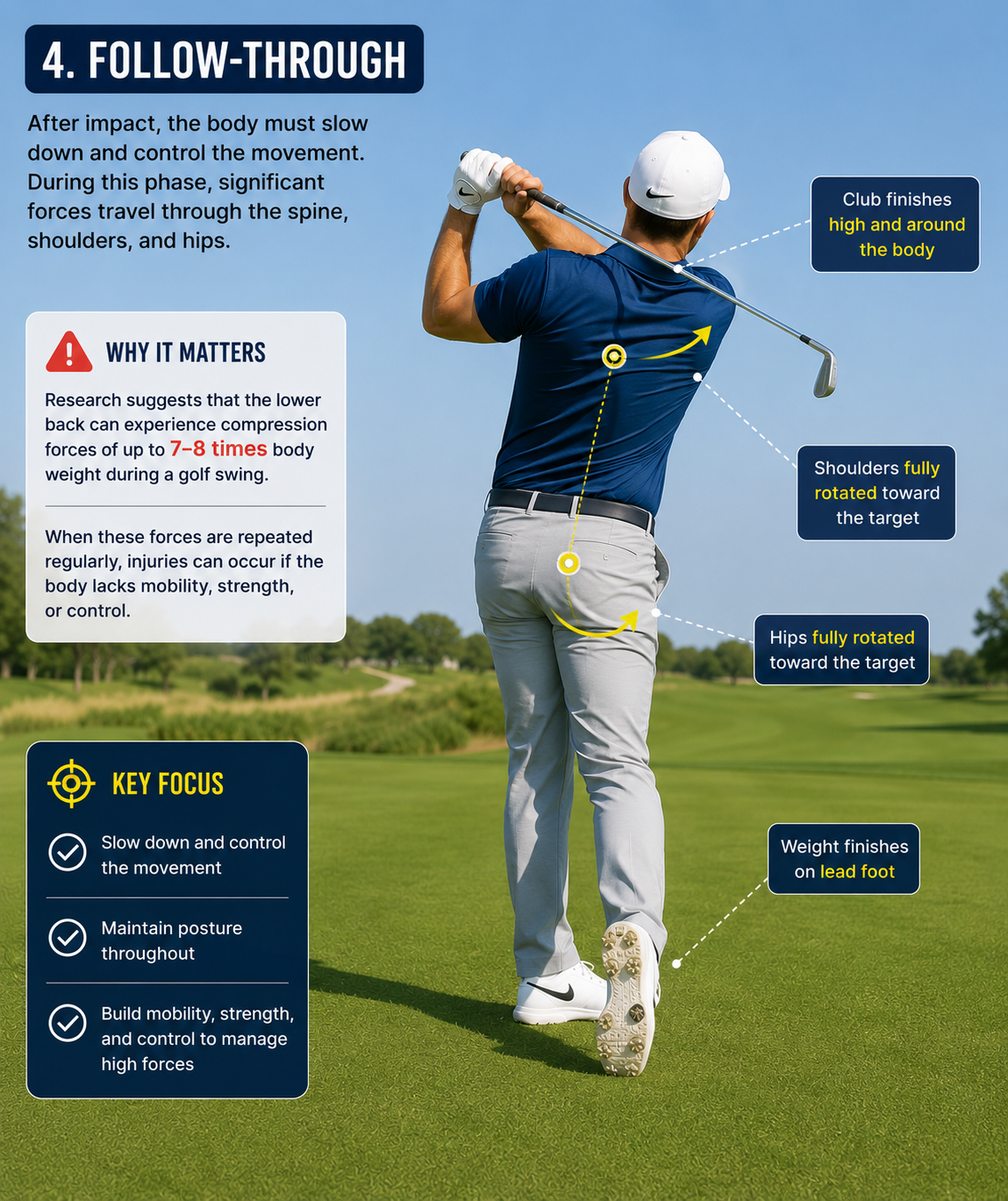
4. Follow-Through
After impact, the body must slow down and control the movement. During this phase, significant forces travel through the spine, shoulders, and hips.
Research suggests that the lower back can experience compression forces of up to 7–8 times body weight during a golf swing. When these forces are repeated regularly, injuries can occur if the body lacks mobility, strength, or control.

Common Golf Injuries

Shoulder Pain
The shoulder is one of the most frequently injured areas in golfers.
A common source of pain is the acromioclavicular joint (AC joint), which sits at the top of the shoulder. Research by Mallon and Colosimo (1995) found that AC joint problems were responsible for over half of cases involving lead shoulder pain in golfers.
Golfers with AC joint irritation often experience:
- Pain at the top of the shoulder
- Discomfort at the top of the backswing
- Pain when reaching across the body
- Reduced confidence during the swing
Rotator Cuff Injuries
The rotator cuff is a group of muscles and tendons that help stabilise and move the shoulder.
When irritated or injured, golfers may experience:
- Constant shoulder pain
- Weakness when lifting the arm
- Reduced shoulder mobility
- Pain during or after a round
- Difficulty completing a full swing
In more severe cases, rotator cuff problems can make playing golf extremely difficult.


Lower Back Pain
The lower back is another common area of concern due to the repeated twisting and compression forces generated during the swing.
Symptoms can include:
- Stiffness after playing
- Pain during rotation
- Difficulty bending or twisting
- Reduced power and consistency in the swing

The Importance of Warming Up
One of the easiest ways to reduce your injury risk is to warm up properly before playing.
Surprisingly, research by Fradkin et al. (2001) found that only 39.5% of golfers performed any type of warm-up before a round.
The same study showed that golfers who followed a golf-specific warm-up routine performed better than those who didn’t warm up at all.
A good golf warm-up should focus on:
- Improving mobility
- Activating key muscle groups
- Preparing the body for rotational movements
- Increasing blood flow to muscles
- Enhancing balance and stability
Recommended Golf Warm-Up Exercises
Before heading to the first tee, try incorporating some of the following movements:
Helps prepare the shoulders, trunk, and core for rotational movement.
Improves balance, hip mobility, and rotational control.
Encourages mobility through the hips, spine, and shoulders.
Perform a series of controlled practice swings to prepare your body for the demands of the round.
How To Prevent Golf Injuries
While injuries can’t always be avoided, there are several ways to reduce your risk:
Warm Up Before Every Round
Prepare your body for the physical demands of golf.
Build Strength and Flexibility
Strong muscles and mobile joints help absorb stress more effectively.
Avoid Overtraining
Practising more isn’t always better. Ensure you allow adequate recovery between sessions.
Work On Swing Mechanics
Poor movement patterns can increase stress on certain areas of the body.
Address Small Niggles Early
Minor aches and pains can often develop into more significant problems if ignored.
When Should You Seek Help?
If you’re experiencing pain that:
- Persists after playing
- Affects your swing
- Limits your performance
- Returns regularly after golf
- Stops you from enjoying the game
It’s worth having the issue assessed.
Early diagnosis and treatment can often prevent a small problem from becoming a long-term injury.
At Newcastle Physio Solutions, we regularly help golfers recover from injuries, improve mobility, and return to playing confidently. Through a combination of hands-on physiotherapy, rehabilitation exercises, and tailored treatment plans, we can help keep you on the course and performing at your best.

References
Fradkin AJ, Finch CF, Sherman CA. (2001). Warm up practices of golfers: are they adequate? British Journal of Sports Medicine, 35, 125–127.
Qureshi AI, Khan MNH, Saeed H, et al. (2022). Injuries associated with golf: A qualitative study. Annals of Medicine and Surgery, 78.
Tilley NR, Macfarlane A. (2012). Effects of different warm-up programs on golf performance in elite male golfers. International Journal of Sports Physical Therapy, 7(4), 388–395.
Mallon WJ, Colosimo AJ. (1995). Acromioclavicular joint injury in competitive golfers. South African Orthopaedic Journal, 4(4), 272–282.