
If you’re searching for private Physiotherapy, Massage therapy, Acupuncture, or Sports rehabilitation, one of the first questions you probably have is:

“How much is this actually going to cost me?“
Most clinics avoid talking openly about pricing .
you often have to call, fill out a form, or sit through an appointment before getting a clear answer. We think that creates unnecessary friction, especially when you’re already in pain and trying to make a good decision quickly.
This page is designed to change that.
Our goal is simple
- Help you understand what physiotherapy and pain treatment typically costs.
- Explain why prices vary so much between clinics.
- Show what affects the number of sessions you may need.
- Help you decide what level of care is right for you .
- Give you realistic expectations before you book.
Whether you choose our clinic or another provider, you should leave this page feeling informed and confident.
Our Pricing at a glance
Treatment Packages
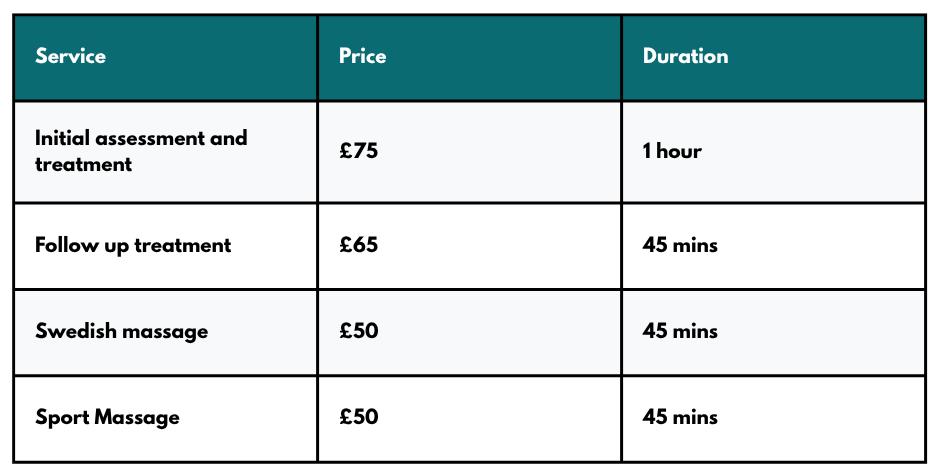
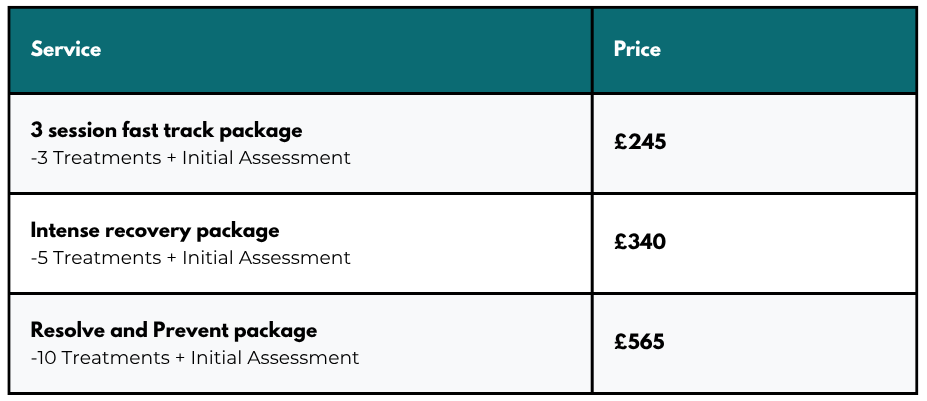
Treatments may include:
- Hands-on manual therapy
- Acupuncture
- Sports Massage
- Cupping therapy
- Sports Taping
- Physiotherapy stretches and exercises
Why Physiotherapy pricing varies so much
Our clinic charges £75, Another charges £150.
They both look like “Physio”.
So what’s the difference?
The reality is that physiotherapy pricing is influenced by several important factors, and understanding them helps you make the smarter decision.
What drives the cost up in Physiotherapy?
1.Longer appointment times
One of the biggest factors affecting price is simply time.
some clinics, such as the NHS, schedule patients in every 15-20 minutes. Others allow 45-60 minute appointments.
Longer appointments cost more because:
- The clinician sees fewer patients per day.
- There’s more time for the assessment.
- Treatment isn’t rushed.
- you receive more hands-on treatment.
- Your treatment plan can be personalised

For busy professionals dealing with pain, rushed appointments often create frustration:
- You wait weeks to be seen.
- Spend valuable time explaining your issue.
- Receive a sheet of exercises.
- Leave without feeling heard.
We believe appointments should give enough time to actually treat the problem, not just briefly assess it.

2. Hands-on treatment
Some clinics focus almost entirely on exercise prescriptions and Pain killers.
Others include:
- Massage Therapy
- Acupuncture
- Joint Mobilisation
- Soft tissue therapy
- Sports taping
- Cupping therapy
Hands-on therapy typically increases the cost because:
- It requires more One-to-one clinician time.
- Additional certifications and training are often needed.
- Treatments are physically demanding for practitioners.
- Sessions are less “high volume”
We believe hands-on therapy matters, especially for people who need relief quickly.
3.Speed of Access
One major difference between private care and public health care is the waiting time.
Many people seek private physiotherapy because:
- They cannot wait weeks or months.
- Pain is affecting work.
- Sleep is disrupted.
- They need to return to sport or exercise.
- They’ve already tried “waiting it out”
Being seen quickly requires:
- clinic availability.
- Staffing capacity.
- Flexible scheduling.
- Operational overhead.

Faster access often means higher pricing, but for many people, reducing weeks of pain is often worth the investment.
4. Complexity of the Problem
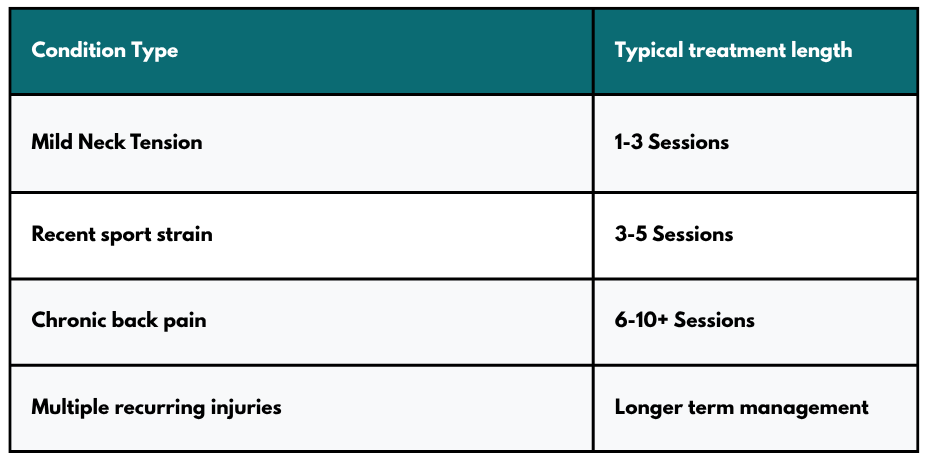
Simple problems usually cost less overall than persistent or complex pain.
For example:
- The more complex the issue
- The more Treatment sessions needed
- The more progression and monitoring involved
What drives costs down in Physiotherapy?
Not everyone needs premium treatment.
There are legitimate lower-cost options available, but it’s important to understand the Trade-offs.
Lower-cost clinics often reduce pricing by:
- Shorter appointment times.
- Higher patient volume.
- Less hands-on treatment
- Junior practitioners
- Standardised treatment plans
This can work well for:
- Minor issues.
- People comfortable managing rehab independently.
- straightforward injuries.
The trade-off is often less personalised care
The NHS provides valuable physiotherapy services, and for many conditions it can be an excellent starting point.
However,
Because of extremely high demand the waiting times tend to be a lot longer, appointment frequency can be limited. Alongside this the individual session durations are shorter and is heavily dependent on self-management.
For some people this works perfectly.
For others, especially those with busy schedules who want there pain resolved quickly, private care offers greater speed, flexibility, and hands-on treatment.
Massage therapy can be a more affordable short-term option for tension and muscle tightness.
However, massage alone may not address:
- Movement dysfunction.
- Recurring injury patterns.
- Joint mechanics.
- Long-term rehab needs.
That doesn’t make massage “bad”, it just means the right solution depends on your goals.
Why are some clinics so expensive?
You’ll occasionally see physiotherapy sessions priced at £100-£150+
That pricing often reflects:
- Highly specialised clinicians.
- Elite sports rehabilitation.
- Advanced diagnostics.
- Central city locations.
- Longer sessions.
- Premium facilities.
- Extensive one-to-one care.
For some people, especially athletes or complex cases, that investment makes sense.
For others it may be unnecessary.
The key question is:
Are you paying for outcomes you actually need?
Why are some clinics so cheap?
This is one of the most important sections on this page.
Very low cost treatment is not automatically bad. But buyers deserve to understand why pricing may be dramatically lower.
Common reasons include:
- Extremely short sessions.
- Minimal hands-on therapy.
- Junior or less experienced staff.
- High patient turnover.
- Generic treatment plans
- Upselling after low-cost introductory offers

Sometimes people chooses the cheapest option because nobody explained the differences.
A £35 session may feel like a bargain, until you realise:
- You only received 10 minutes of actual treatment.
- you saw a different practitioner every visit.
- the pain keeps returning.
- you end up paying for more sessions overall.
The cheapest option upfront is not always the least expensive long term.
Where our pricing sits in the market
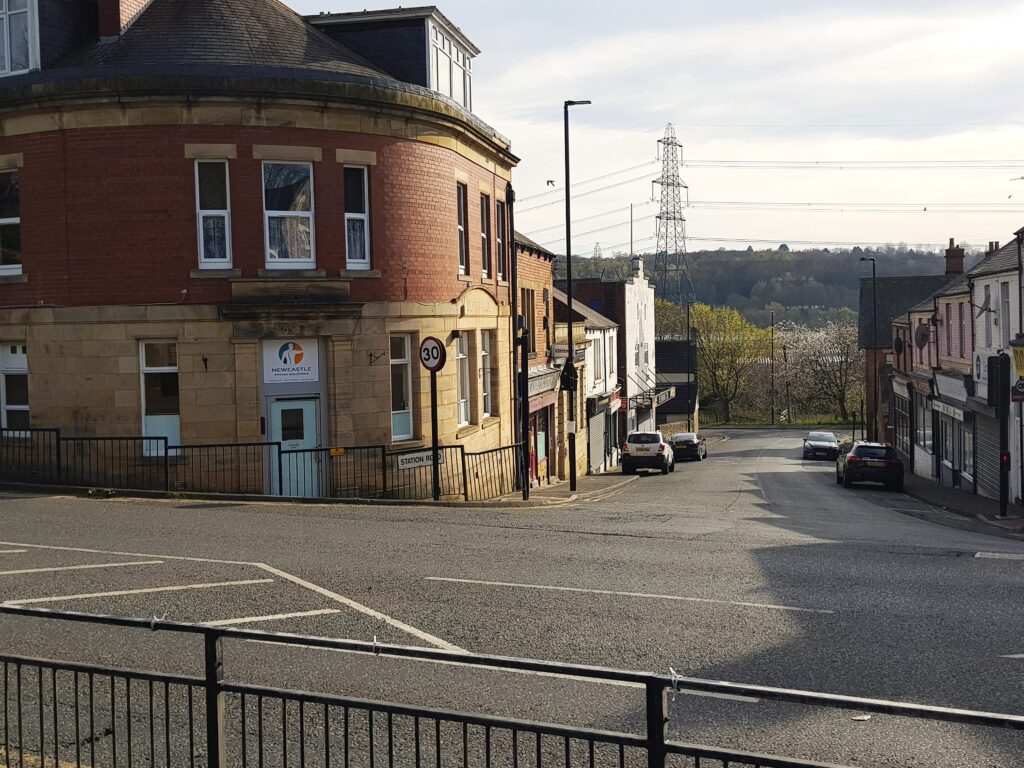
We position ourselves in the Mid-range private physiotherapy market.
We are not:
- The cheapest clinic
- The highest priced premium sports rehab facility
our pricing reflects several deliberate decisions:
We believe you should be seen quickly
When you’re in pain, waiting weeks is frustrating.
We prioritise access so you can start treatment sooner.
We believe you should receive hands-on therapy from the very first session
Many patients want more than just exercise sheets.
Our treatments may include:
- Acupuncture
- Massage therapy
- Cupping therapy
- Sports taping
- Manual therapy techniques
We believe appointments should not feel rushed
You deserve enough time to fully explain your issue properly and ask as many questions as you need, all whilst receiving a full session of treatment. By the end you will confidently understand your recovery plan.
That philosophy affects pricing, but also affects patient experience and outcome.
How Physiotherapy is typically packaged
Most private clinics structure pricing in one of three ways.

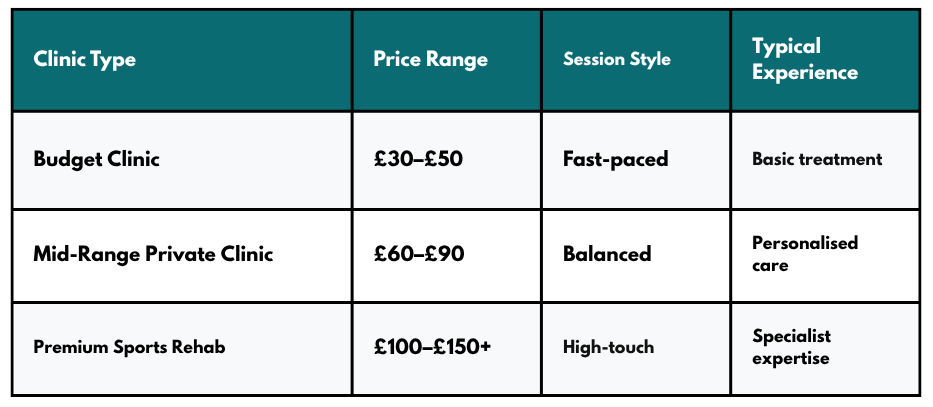
Tier 1:Budget/high-volume clinics
Typical Range:
£30-£50 per session
This usually includes:
- Shorter appointment times
- Basic exercise plans
- Limited hands-on care
Best for:
- Minor injuries
- Budget- conscious patients
- Self-directed rehab
Tier 2:Mid-range private clinics
Typical Range:
£60-£90 per session
This usually includes:
- Longer appointments
- Personalised care
- Hands on therapy
- Ongoing progression
Best for:
- Busy professionals
- Persistent pain
- Faster recovery goals
This is generally where our clinic sits.

Tier 3: Premium Sports rehabilitation
Typical Range:
£100-£150+ per session
This usually includes:
- Specialist sports expertise
- Advanced testing
- Elite athlete care
- Extensive rehab systems
Best for:
- Competitive athletes
- Complex Rehab cases
- High performance goals
Lifetime cost vs initial cost
This is something many people don’t consider initially.
A cheaper session is not always cheaper overall
Example
Option A:
Option B:
£40/session x 10 sessions = £400
£65/session x 5 sessions = £325
If more effective treatment helps you recover faster:
- You may need fewer appointments
- You may return to work sooner
- You may avoid returning flare-ups
- You may reduce medication reliance
That’s why it’s important to think beyond the price of a single appointment.

Financing and Payment options
We aim to keep treatment straightforward and flexable.
Pay-as-you-go
Ideal for:
- New injuries
- occasional flare-ups
- People wanting flexibility
Treatment Packages
Our treatment packages reduce the cost per session for patients likely to need ongoing care.
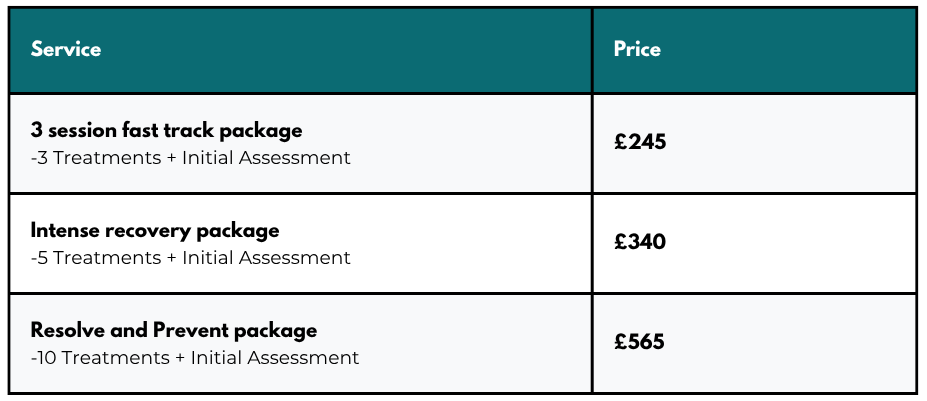
Packages are often useful for those experiencing chronic pain or recurring injuries. these are tailored for longer term recovery.
Realistic examples and price ranges
Example 1: Desk worker with neck and shoulder pain.
Symptoms:
- Tension headaches
- Stiff neck
- Pain after long workdays
Treatment:
- Initial assessment
- Mobilization
- Massage
- Stretches
- Support tape
Typical Investment:
Initial assessment + 2 Sessions = £205
Initial assessment + 4 Sessions =£335
or
£245 with our 3 session fast track
Typical Timeline:
2 – 4 Sessions
Example 2: Gym injury/sports strain
Symptoms:
- Pulled muscle
- Pain during training
- Reduced mobility
Treatment:
- Initial assessment
- Massage
- exercise
- Sport Taping
Typical Investment:
Initial assessment + 4 Sessions = £335
Initial assessment + 6 Sessions = £465
or
£340 with our Intense recovery package
Typical timeline:
4 – 6 Sessions
Example 3: Persistent Back Pain
Symptoms:
• Ongoing pain for months or years
• Flare-ups affecting work and sleep
Treatment:
- Initial assessment
- Mobilization therapy
- acupuncture
- exercises
Typical Investment:
Initial assessment + 6 Sessions = £465
or
£565 with our Resolve and Prevent package
Typical Timeline:
6+ Sessions
Pricing FAQs
It depends on:
• How long the problem has existed
• Severity
• Lifestyle demands
• Previous injuries
• Recovery goals
Some people improve in 1–3 sessions.
Others with persistent pain need a longer plan.
No.
We believe pricing should be transparent.
If additional services or recommendations are suggested, we’ll discuss them clearly before proceeding
Private clinics typically offer:
• Faster access
• Longer appointments
• More hands-on treatment
• Greater scheduling flexibility
NHS care remains incredibly valuable — but operates under different resource constraints.
No ethical clinic can guarantee permanent results.
What we can do is:
• Identify contributing factors
• Reduce pain
• Improve movement
• Help lower recurrence risk
Long-term outcomes also depend on lifestyle, activity, and consistency.
Because value is not only about session price.
It’s about:
• Time
• Experience
• Thoroughness
• Treatment quality
• Speed of improvement
Sometimes paying slightly more upfront leads to fewer sessions overall.
───
Visual Pricing Comparison Chart
Typical Physiotherapy Pricing Landscape
───

Historical Pricing Trends in Physiotherapy
Over the past decade, private physiotherapy pricing has gradually increased due to:
• Rising clinic overheads
• Increased demand for private healthcare
• Higher practitioner training costs
• Greater demand for longer appointments
• Increased focus on one-to-one care
At the same time, patient expectations have changed.
People increasingly want:
• Faster access
• More personalised treatment
• Better communication
• Integrated therapies
• Convenience
Modern physiotherapy is no longer just rehab exercises — many clinics now combine multiple treatment methods under one roof.
───
Is Private Physiotherapy Worth It?
For the right person, absolutely.
Especially if:
• Pain is affecting work
• You can’t exercise normally
• Sleep is disrupted
• You’ve tried “waiting it out”
• You want to avoid worsening the issue
But honesty matters here too:
Not everyone needs extensive treatment.
Sometimes:
• A few sessions are enough
• Self-management works well
• Simpler care is appropriate
Our goal is not to sell unnecessary treatment.
It’s to help people recover as efficiently as possible.
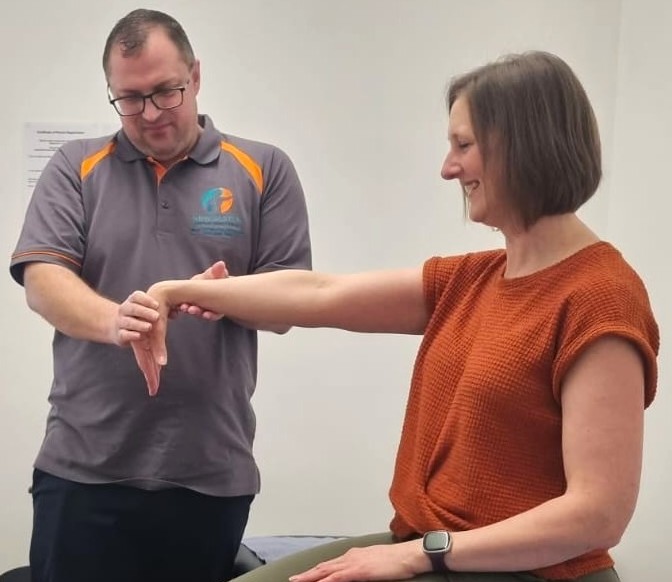
Ready to Start?
If you’re in pain and want clear answers, fast access, and hands-on care, the next step is simple.
Book an Initial Assessment — £75
During your appointment, we’ll:
• Assess the root cause of your pain
• Explain what’s going on
• Recommend a realistic treatment plan
• Give honest expectations around recovery and cost
No pressure.
No hard sales tactics.
Just straightforward advice and treatment designed to help you move and feel better faster.
Or contact us with any pricing questions — we’re always happy to talk openly about costs before you book.